
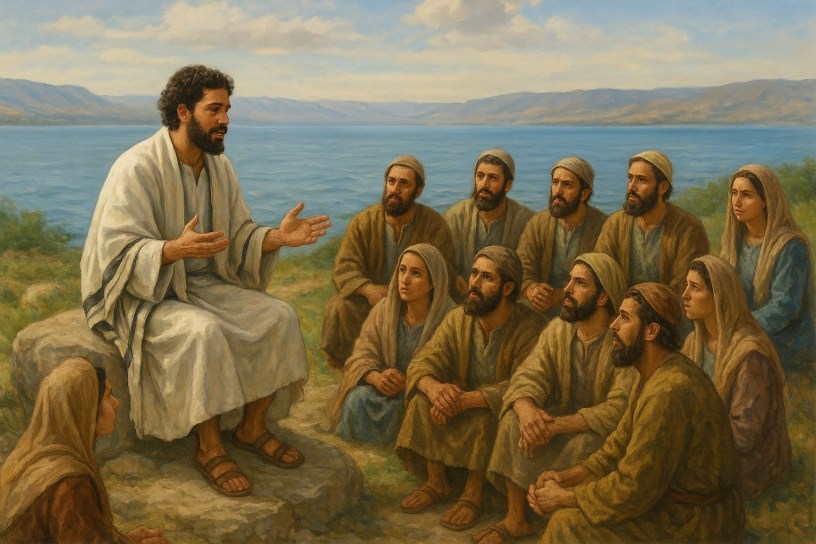
In generic terms, a disciple is one learned in a discipline. Such a circular definition may seem trite, but these derivations of obviously the same root both connote rigor, commitment and significant accomplishment.
At the collegiate level, various fields of study are referred to as disciplines. When one enters college, one often does not initially study one’s chosen field, but must first take more generalized, preparatory courses before entering a particular “school.” While in preparatory tutelage, one is not yet a disciple—only preparing to become one. Once engaged the field’s particular coursework, one is taught by dedicated masters of the discipline.
Martial arts have similarities in that one must typically progress in both knowledge and skill under the guidance of lesser teachers before one can study with a master.
In both cases and in disciplines beyond these realms, there is considerable investment and sacrifice and there is the possibility of personal mastery in the chosen discipline.
All of this applies to being a disciple of the Master, Yehoshua. It is not casual or with reservations; it is full-time, all-in.
One of the first things to know about disciples of Yehoshua is that we are dependent on the Torah—that is, the first five books of the Hebrew Bible. (Obviously, we are dependent on God, but that should really go without saying; it goes with being dependent on the Torah.)
Disciples of Yehoshua were born of Judaism and existed well before there was a New Testament or Christians. Neither of these are the source of our values, lifestyle or beliefs, but the New Testament does, to some extent, affirm our origins and our ways.
For example, with regard to the Torah, Yehoshua himself taught:
Do not think that I have come to abolish the Torah (Law) or the Prophets; I have come not to abolish, but to fulfill. For truly I tell you, until heaven and earth pass away, not one letter or one dot will pass from the Torah until all is accomplished. Therefore, whoever violates one of the least of these commandments and teaches others to do the same will be called least in the Kingdom of Heaven; but whoever does them and teaches them will be called great in the Kingdom of Heaven. [Matityah (Matthew) 5:17-19]
A disciple of Yehoshua is, therefore, a disciple of the Torah and the Prophets, the second great collection of the Hebrew Bible.
The New Testament book of Acts evidences this integral relationship when briefly recounting deliberations the leadership of the Jewish disciple community undertook regarding the prospect of gentile newcomers:
For this reason I judge not to trouble those from the nations turning to God, but to write to them to hold back from the pollutions of idols, from sexual immorality, from that strangled and from blood. For in every city from ancient generations Moshe has those proclaiming him, having been read in the synagogues on every Shabbat. [Acts 15:19-21]
“Moshe” is, of course, shorthand for the Torah.
Ya’akov, the presiding disciple who uttered these words, was attesting to the weekly Torah reading as an already ancient and universal Shabbat custom in his day. It remains the prevailing Jewish custom to the present, including amongst all disciples of Yehoshua. Ya’akov was hardly advocating but four long-term prohibitions for gentile attendees. Rather, he was merely suggesting a beginning, from which newcomers would learn the Torah’s broad standards over time through their weekly exposure.
It is noteworthy that Acts does not establish the weekly Torah reading custom, but simply attests to it. This is the way the New Testament functions in general—less a source than an affirmation—at least, so long as the customs are perpetuated in practice. If need be, the New Testament can also serve as part of the recipe for reconstituting a disciple community in the event of the disruption of persecution, war, famine or other catastrophe.
The two New Testament passages above call attention to the central part the Torah plays in disciple thought, values and practice. It should be readily apparent, then, that there is no introduction to discipleship in Yehoshua without an introduction to the Torah.
 Straight & Narrow